(This is in continuation with the previous blog, click here)
On
the 16th of March, 1521, the Portugese explorer Ferdinand Magellan and his
fleet of Spanish vessels finally reached the fabled island of Zamal in Mindanao
of the Maharlikhan lands after 10 days of uneventful trip from the place he
dubbed as Ladrones islands (Guam). Had the fleet sailed to Samar as conventionaly
believed, the deep and treacherous currents of the Philippine Trench that they
must traverse would surely twist and churn the wooden galleons making its
harrowing crossing definitely far from uneventful, if the fleet dared that which, contrary
to what mainstream history may had misled mainstream society to believe far too
long, it less likely didn’t.
As the
silhouette of the land of their destiny unfolded before them, the crew that had
traveled halfway across the World to reach the place felt both excitement and
foreboding, for these mysterious lands where lived the Maharlikhans, the Free
Peoples, exuded both the enchanting, the danger and adventures, the promise of
fabulous wealth that the ancients had since known as the Isles of Gold, and of
myths and legends recounted through generations with celebrated voyage of
ancient heroes of renown.
Magellan
had deemed it prudent not to immediately dock in Zamal, for who among them knew
of what fate awaited their place in history beyond those enigmatic shores and
its ancient dwellers. Instead, he commanded to anchor overnight in the nearby
island of Talikod. The island was dearth of water for neither rivers or creeks
could be found, but like blessing poured from heaven would they discover two springs
with the freshest, limestone filtered water springing forth its life
nourishment even to this present day. As Pigafetta wrote hundreds of years ago,
Magellan and his crew celebrated such blessing that greeted them and thus named
it as the “Watering Place of good signs.” It was on this island that Pigafetta
first reported sighting of the precious metal that they had traveled for
thousands of leagues for: gold.
Two
days after the fleet had docked, the native inhabitants on their bancas from
nearby Zamal sought to interact with the pale-skinned visitors and their large
wooden ships. Pigafetta mentioned how one of the inhabitants expressed “demonstrations
of being very joyous at our arrival,” while
five of the “most showy” of the folks remained to interact with them. Indeed,
the elaborately dressed original "Habirus" from the mainland, whom a historian once
referred as the “most handsomely dressed” among tribes with their "habi" (weaving), had reasons to be very
joyful.
Above
the yonder mountain ranges of the mainland, the Habiru or Hebrew Tribe (later known as Bagobos after the Illuminati infiltrated colonizers in its divide and conquer strategy scattered instead into more than 100 tribes to relegate our ancestors from Indigenous to "indigent"), inhabitants that lived
along the foothills and mountain ranges of the grand ancient peak, Mt. Apo
that Pigafetta described as a “high land,” had their watchtower in Catigan that
overlooked the vast Davao Gulf; vigilant village watchers must had seen the
strange large ships that sought anchor in Talikod island near Samal, and so
they traveled down to Davoh and crossed towards the island with their Sama
brethrens to meet the visitors. Magellan, finding the natives to be gracious and reasonable,
offered gifts and in return his crew were given provisions as figs a foot long
(bananas), umai (rice), the highly
versatile coconut that the locals called cochi
from where sourced sweet water, oil, meat, vinegar, and of course wine.
Long
had the ancient Bagobo / Habiru tribe waited through the ages with the prophecy of their
ancestors who spoke of offsprings of the very first children, their long
separated brethren that traveled to faraway lands conceived from their
foreparents, Humanity’s first man and woman, Toglai ang Toglibon, who shall one
day return. That eventful day had come, the offsprings had finally reached the
Maharlikan lands. The prophecy of their ancestors was finally fulfilled, and
they were very joyous indeed (albeit the offsprings wearing paler skin).
Eventually,
Pigafetta was told of the small island adjacent of Samal where they first
sought to land, presently known as Talikod island, by its ancient heavy set
name, Humunu. As old as it
sounded, the word may had been a remnant language of an extinct, unusual
race that once lived in nearby Samal island and wrought havoc among the
mainland inhabitants, and even of ancient heroes of yore from faraway lands
lost in their voyage thousands of years ago. This mysterious, long extinct
tribe was known as the Dinagat; they were the ancient race of giants of whose
skeletal remains have even been discreetly dug up and witnessed by not a few
people in modern times, their first hand testimonies attest that indeed such
entities had once existed.
Pigafetta
by then had amassed further knowledge of the scenic geographical vicinity of
the Davao Gulf. He later found out that the Samal he initially saw was “not
large,” hence it dawned that it was indeed an island surrounded by the
“circumjacent islands” of Davao Gulf. The natives also referred to the island
as Zuluam, attesting the influence of
the Sultanate of Sulu on this side of Mindanao by the 16th Century. By this
description of Pigafetta the mainstream position of Samar where Magellan allegedly
landed should further be challenged for unlike Samal island, Samar was
definitely not a separate but rather an integral part of one of Visayas’
largest islands, hence Pigafetta could never describe the latter as such for it
will contradict his statement being “not large,” which de facto CORPORATE mainstream history had erred all along.
Such error committed had misled generations of Humanity and
reduced de facto CORPORATE mainstream history to misdirected position, particularly on the
argument that after Samar, Magellan performed the first mass in Limasawa island.
It was in 1667 that an alleged Jesuit “historian,” Francisco Combes, may had turned
out the culprit. Neither in any earlier documents before Combes would there be
heard the name Limasawa. In fact ,it was another Jesuit priest, Fr. Francisco
Colins who coined the word in Visayan as he pointed to an island as “Dili Masaua”
meaning NOT Masaua (the real Mazzaua was in Butuan, still in Mindanao).
Unfortunately the term was misinterpreted by Manila-centric, non-Visayan
speaking “historians,” timid to not even scrutinize its veracity and so stuck unchallenged by prevailing
mediocrity in mainstream with warped version established as historical “fact.”
As if such twisted contribution were not enough, Combes neither mentioned of any
mass held and, despite how Pigafetta otherwise admirably described the Zamal natives
to be “with very good manners and gracefulness,” the contemptible Combes branded them as “barbarians”
instead. Worsened still by mediocre mindsets, no considerable figure dared to
even challenge the unceremonious and inaccurate description of our noble ancestors
by an incompetent Spaniard for nearly 400 years.
A few
days ago this blogger encountered an acquaintance holding position as president of senior citizens in his neighborhood,
and informed of a priceless knowledge. During the early 90’s an old man from an
Indigenous tribe whom he befriended revealed to him of a marker in Talikod
island since the Spanish era. Could this be the certain marker that etched the place where Magellan may had landed? How could the
ancient knowledge of this old man and his people be unceremoniously ignored by
mainstream academe? For
mainstream historical institutions in this country that deliberately ignored the
ancient knowledge of Indigenous Peoples especially in Mindanao, such mediocre, unwitting
gestures are deserving of contempt.
And
so by misdeeds of irresponsiblity and warped sense of history the implications even
through the present saw this country reduced with dysfunctional society
recently beset with political corruption of unprecedentend level with self-serving
politicians voted by an electorate reeking in mediocrity, its history lessons
relegated to superficial colonial mentality and ignorance even to its otherwise
rich pre-colonial history, its sense of ethics and values eroded by moralistic
hypocrisy, a populace maleducated, a system even manifesting the unjust, blasphemous
gap between extremely rich and extremely poor with the former behaving like crass
necolonialists over their own fellow countrymen worse than foreign counterparts,
a dilemma manifesting in a country that sinned for unwittingly disregarding the
sense of historical foundation of its ancestors, and instead timidly aped misaligned foreign
dictates.
More
than two decades since Magellan’s fleet landed in the island of Humunu near
Zamal, the otherwise blessed, enchanting lands would then been christened by the Spanish
commander Villalobos as Las Islas Filipinas eventually to be known as
Philippines, in endearment to the Spanish empire’s crown Prince, Philip II. It
should be noted that Philip II, then as child prince was the direct descendant of Philip
the Good, Duke of Burgundy, and the founder of the Order of the Golden Fleece. The
members of this elite Order included illustrious, select figures of European
knights, royalties and eventually in the present with kings even from distant
lands, which the King of Thailand was also a member of.
Indeed
Magellan knew his destination having been tasked by the Monarchy of Spain to
accomplish the daunting feat of reaching the very edge of the known World on
uncharted waters, as if reminiscing back the travails of ancient heroes of Western
civilization to exotic lands at the edge of the Earth, etched in collective
memory for thousands of years with the likes of Jason and the Argonauts and
their quest for the Golden Fleece (they were said to have explored continental
Asia on their next expedition), of Odysseus and his fleet of ships from the Trojan war lost in
voyage, the adventures even of encounters with a cyclops giant on an enigmatic
island who guarded the Golden Fleece; the long years of their journey had
dragged them farther beyond the edges of unknown worlds and into the enchanting
places, and most likely to the isles of Maharlikhan lands.
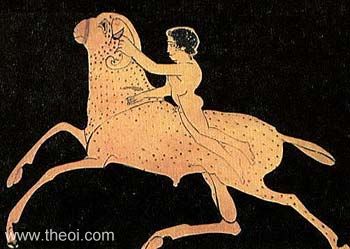
 By
the accounts of ancient Greek legends the Golden Fleece could be traced back for
thousands of years to the classic golden age where magic and enchantment were
as real as breathed air, where gods once roamed down to the world of mortals
and played with their fleeting lives as children would with toys, and where
giants once wreaked havoc on frail humans.
By
the accounts of ancient Greek legends the Golden Fleece could be traced back for
thousands of years to the classic golden age where magic and enchantment were
as real as breathed air, where gods once roamed down to the world of mortals
and played with their fleeting lives as children would with toys, and where
giants once wreaked havoc on frail humans.
These
ancient foreign travelers may had once established here and brought fame to the
Maharlikha lands even during the time of Solomon and his famous gold mines of Ophir
located possibly north of Mindanao in the ancient Kingdom of Butuan, of whose
glitter graced the temple of Jerusalem. Yet, the offsprings of these ancient
seafaring peoples from distant lands may still had existed to this very day,
its sprinkling of Hebrew, Greek, Etruscan words still surviving and spoken by
the enigmatic Eskaya tribe of Bohol, nearby across in Visayas region of the
Maharlikan lands.
 |
| photo by CORBIS |
In
the ancient land of Chryse, the Isles of Gold as the Greeks had known for
thousands of years, there existed an island very rich in history, mystery and
treasures that its legendary inhabitants were said to be so proliferously
blessed with gold such that they decorated their houses with it, of a fearsome ancient
giant race that once roamed on its hills and shores and tasked by
the gods to guard the elusive Golden Fleece, of golden secrets known only from
among the privileged few that had captivated monarchs, knights, and even civilizations
for millennia of years. The island was then known as Zamal, for no other place
in the ancient World could attest of such fame and profoundly rich history,
wealth and heritage as this island itself, in the land of the Maharlikhans.
It
was in the ancient, rich, enchanting island of Samal in Mindanao in the Kingdom of Maharlikhans that Magellan knew where he shall go.