Showing posts with label davao. Show all posts

Sunday, June 8, 2014

ancient Maharlikha weather modification technology


Like the Banaue Rice Terraces (as mentioned by author Frank Joseph during interview with his book "Lost Cvilization of Lemuria" on this link) , Davao City of the Maharlikhans is also typhoon-free due to the ancient weather modification technology in Nan Madol, Micronesia most likely by our Maharloka Ancestors, the most powerful nation in ancient Lemuria, possibly dated in contemporary with the Indonesian Gunung Padang pyramid about 20,000 years ago prior to the sinking of Sundaland. In the World landmark IPRA (Indigenous People's rights Act) Law by Marcos with the Presidential Decree on Ancestral Domains, of the ancient Ancestral Domains mentioned by virtue of thousands of years of Heritage of Maharlikhan ancestors, only one city was mentioned: Davao.

The Banaue Rice Terraces was the food basket the could feed more than a million ancient inhabitants. By then, tens of thousands of years ago, it had already fed an ancient city with such huge population, thriving with highly advanced transportation that could traverse the thousand kilometers span of these areas, such flying ships in Sanskrit referred to as "vimana" and that which the Maharlikha Indigenous Peoples referred to as "sarimbar". From the ancient weather modification technology constructed in Nan Madol, Micronesia that protected the Banaue food basket, the same would protect the urban area that it fed. The PD 410 of the de facto and interim (temporary) republic specifically mentioned of only one city, Davao with history that spanned the more ancient of Maharlikha Heritage.

http://maharlikhan.blogspot.com/2014/01/there-is-very-intriguing-discussion.html

Any typhoon formed within the triangle of Nan Madol - Banaue - Davao may render the city area safe and protected by the ancient Maharlika technology like the alleged supertyphoon about to strike Davao weeks ago but mysteriously diffused. But in the era of Climate Change typhoons are starting to form even underneath Mindanao that could render the city vulnerable. Further the modern era advancing in weather technology HAARP and the recent Typhoon Yolanda attack. Alarmingly the puppet Yellow administration financed by coal businesswoman Napoles is instead saturating Mindanao and the country with coal plants despite warnings by UN and even banning by other countries due to its pollution and alarming implication to Climate Change.

Coal plants are inevitable thermal pollutants and exacerbate rise in Sea Surface Temperature (SST) already heated by Global Warming. Warmer SST is Scientifically proven to affect typhoon direction and intensify its destructiveness, just as the tragedy that recently occurred in Cagayan de Oro City and In Davao Oriental in mainland Mindanao, the latter otherwise previously known as "typhoon - free".


Monday, October 31, 2011

repost on the Samal People and Giants


Samal Island, or PU located in Davao Gulf  indeed had a very long history. In the ancient of times it had been said (partly read from researches by UP Prof. Fe Mangahas)  the island was once inhabited by giants called the Dinagat. These giants were abusive for they would raid villages (most likely along mainland Davao) and steal, vandalize (like defecating on their kitchen), and kidnap women and made sex slaves. Babies out of such abuse that were born giants were assimilated, those that remained human-size were rejected and separated with the kidnapped women to be their slaves.

The humans, fed up with the abusive giants, gathered together to device ways on how to get rid of them. They decided to deceive the giants by sending them delectable foods laden on a small boat. the giants upon seeing the boat, surmised it as offering of submission by the tiny humans and that the humans had finally conceded to their "superiority." The food however, was laced with poison.


The Dinagats only allowed all their fellow giants to partake of the food and prohibited human-sized slaves and the kinapped women to partake of the feast whom they treated as inferior class. All the giants were ultimately killed, except for the human-sized slaves, now Free. Thus the survivors called themselves "Samal," which said to be meant as dregs, or left-over.


However, there were indeed accounts of first-hand witnesses (local inhabitants, construction workers, treasure hunters) who discovered skeletal remains in Samal. Most of these discovered remains were stolen and unaccounted for. Even foreign scientists investigated the phenomenon. but mediocre nartional historical authorities (as they had, until recently, ignored the role of Mindanao legacy in mainstream history lessons ) outrightly dismissed these priceless gems of local history that could otherwise spell the difference to the dysfunctional state of this oligarch-dominated state and society.

Even the Sama's creation myth is very old, and eerily similar with the myths of the ancient Sumerians (Abraham's father was a Sumerian priest) supposedly the oldest civilization in the World, according to western historians that is. It was also intriguing that the bible mentioned about such giants most probably borrowed from Sumerian accounts, known as Nephilims, borne of angel (read: Extraterrestrial) and human parents.

Saturday, October 29, 2011

the Bagobo People's shall be vindicated


The ancient knowledge of the Bagobo Peoples of Davao and Mindanao, preserved and nurtured through the ages their ancient claim that Cibolan River of Apo Sandawa, was the cradle of Human civilization, SHALL BE VINDICATED.

I had discovred from personal research that the term "Cibolan," remembered just as our Bagobo brethrens said they would, by its scattered children from Negros to as far as the American continent by the Native Americans, was a word not even originating from the latter, but from the language of the Dravidians of southern India and of our Pilipino ancestors!

"Cibolan" comes from the Dravidian / Pilipino root words civ-pola, meaning "golden city" or "city of reds."

The ancient Laguna Copperplate Inscription revealed that our ancestors had used the ancient, old Javanese language of Kavi.

The mystery is finally revealed, the distant liink between the Native Americans of the American continent, the Bagobo People's of Southeast Asia, and ancient India of South Asia are finally meet and my personal research has turned full circle, through the ancient languages of the Sri Vijaya Empire, Kavi!

Kavi, or Old Javanese is a branch of language that developed from the Dravidian languages of southern India!

Pola in Pilipino language, means "Red". Gold in its state of high quality, is reddish in color.


Dravidian languages are spoken by about one-fourth of all Indians, overwhelmingly in southern India. Dravidian speakers among tribal peoples (e.g., Gonds) in central India, in eastern Bihar, and in the Brahui-speaking region of the distant Pakistani province of Balochistan suggest a much wider distribution in ancient times. The four constitutionally recognized Dravidian languages also enjoy...

•Indic writing systems (in Indic writing systems)
A southern form of Brahmi developed into the Grantha alphabet, from which in turn the writing systems of the Dravidian languages of southern India (e.g., Tamil, Malayalam, Telugu, and Kannada) as well as the writing systems of the Sinhalese language of Sri Lanka, the Khmer and Mon languages of Southeast Asia, and the Kavi, or Old Javanese, system of Indonesia were developed. The Thai writing...


However, the Native Americans pointed the direction to the Spanish Conquistadores that ancient Cibola, the City of Gold, the fabled El Dorado, to the north of presently known Mexico. How could the Bagobo Peoples dare to claim that ALL tribes in the World originated from Cibolan River of Mt. Apo, when Davao is riduculously too far away from "north of Mexico" ?!?

Ridiculous indeed, or so it seemed...


...Until one clicks on the previous blogs:

Did ancient Humanity Originated from the Foothills of Mt. Apo?
Of Davao's cibolan River, American Indians, and "Golden City"
Further Proofs for my "Cibolan Theory"

Friday, October 28, 2011

repost of my research on Ophir

Been a long time since I last posted, having to be with a mediocre society that put in position an incompetent oligarch puppet as national leader out of mudslinging, ignorance and hypocrisy can be so uninspiring. However, we shall go on.

This is a repost from another website, of my research on Ophir:


This is what I discovered culled from personal research about the ancient land of Ophir and how I had it traced in our archipelagic islands, possibly in Mindanao.

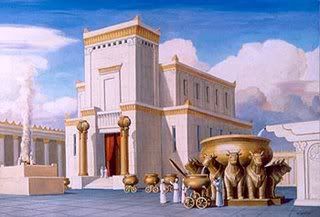
During the bloody Crusades with the capture of Jerusalem by the Knights Templars on the 11th Century, the Knights while searching for relics from the ancient city discovered the treasure map of Solomon that detailed the location of the gold mines of biblical Ophir whose gold were said to be used in the building of Solomon's temple.

By the 14th Century the Templars, declining in influence with unsuccesful campaigns against the Muslim world and the recapturing of Jerusalem by the Turks in the 13th century, were persecuted by the King of France and the Pope and were eventually destroyed during the Inquisition, with their Grand Master Jacques de Molay burned at the stake on March, 1314 defiant to the end as to utter against those who wronged him, in which the Pope died a month later, and the French king died in a hunting accident before the year ended.

The surviving Knights Templars escaped, hiding with them treasures and the relic of the ancient map of Solomon discovered from Jerusalem hundreds of years ago. They traced the location of Ophir from Solomon's ancient map, and the European warriors ultimately arrived in the shores of this archipelagic islands, most likely somewhere in the Northeastern Mindanao in Butuan-Surigao area (about 200 years even before Magellan's fleet arrived (the illustrious navigator also held the first mass in Masao (Mazaua) , Butuan; some of the country's conventional historical beliefs biased to Luzon-Visayas are erronous and must be rectified, the first mass must have been held not in the Visayas but in MINDANAO)

In this land they buried their treasures with the aid of the Indigenous Peoples, their leaders known among the learned as Lemurian priests (some Templars who were left behind to guard the treasures later intermarried with their daughters), the treasures protected from greedy and vile hands even to this day by powerful deities of our pre-colonial ancestors known as Diwatas (better not be myopic when dealing with this, trash bigoted colonial biased paradigms down the bin!).

In my personal research I discovered that it amazingly fit like jigsaw puzzle as to my questions why some Indigenous Peoples esp. in Mindanao and Davao exhibit caucasian features, as well as clues to the unearthed excellently crafted antique pre-colonial gold jewelries dated 10th-13th Century (had been suspecting of European influence in its intricate details upon seeing it in the Ayala Museum in Makati) that were discovered also in Butuan-Surigao area in Mindanao.


Many years before I had heard that it was said the place where the gold used in Solomon's Temple came from Butuan area in Mindanao. At first it seemed preposterous and shrugged it off, until recently when my personal research (found the mainstream history education to be contemptuously incomplete) led me to this.


Sunday, December 6, 2009

my Maharlikan prediction

My Maharlikan prediction in retaliation against a forumer who consistently attacked my views in a topix.net forum but, intriguingly he's not even a Filipino or Fil-Am! Smells fishy. Maybe someone whose suckery will soon be threatened by the reawakening of the Maharlikan individual, for such individual will no longer claim himself/herself in a name like mantra seemingly synonymous with: "We are proud 2nd class subjects of colonial invaders! We are proud second class subjects of colonial invaders, We are proud..." Duh.


I am a fiercely independent (minded) person and I always will be. I still abide by my views and I am able to defend it. I am not surprised at at all at the reactions of some people here that only hinted their mediocrity, and convincing such kinds is the LEAST of my priorities.

There are individuals however, distinct and openminded as they may be, who are beyond the years of the typical closeminded hoards and able to grasp what I have perceived. My views are so beyond the grasp of the MEDIOCRE. There will come a time when the detractors will eat their words, but to partake of the dawn of the light I foresee they will be proven WRONG and I will perceive those who attempted to discourage and drag me down as NOT WORTH my effort.

I predict this:

In the coming years the EAST will outshine the WEST.

Southern Mindanao will be a ray of hope in this pathetic country for they chose to strengthen themselves with their ancient roots and be "indigenized" rather than to compromise with the inferior mindset of the rest of mediocre Filipinos to the mentality of the "colonized", who are to be blamed for the pathetic state of this country and its rapidly degrading reputation to the rest of the world that they themselves can't deny.

This part of the country will attract pioneering and independent minded individuals who would rather get away from mediocre hoards and create a new beginning for themselves, and considerably for a renewed nation.

Metropolitan Davao must prepare itself to accommodate their influx yet importantly must ensure that harmony with Nature is nurtured for it is where the profound inspiration is rooted. Davao have chosen the path uniquely its own and it is the right path different from the loopholes experienced by other major cities of the country, particularly M.Manila and Cebu with their irresponsible pollution, wanton exploitation and rampant crimes. Davao will be the new model towards the renewal of a nation.

There will come a time when a worthy generation that chose not to be subjugated like idiots to colonial mentality, starkly contrasting the errors of inept generations before them, will finally lead this renewed nation to its glorious future together with the rise of the EAST, and Southern Mindanao will lead them the way.

Remember that.

Saturday, November 7, 2009

Did Humanity's ancient Tribes originate from the foothills of Mt. Apo?!

Mt. Apo, Mindanao, Philippines


This may seem a prequel to the previous blog that I posted, albeit with an even more fantastic twist, and a far larger scale at that.

Scenic Mt. Apo is the country's highest peak, majestically towering over the vast expanse of the southern tip of Mindanao island bordering over the mountainous edges of Davao City. However, the ancient narratives of an indigenous people that lived along its mountain ranges, the Bagobo tribe (they also named the peak, which means "grand old man"), bespeak about a fantastic claim that the names of ALL of Humanity's tribes supposedly originated from the foothills of this majestic peak!

Here is the Bagobo account:


Origin
Bagobo (Mindanao)


In the beginning there lived one man and one woman, Toglai and Toglibon. Their first children were a boy and a girl. When they were old enough, the boy and the girl went far away across the waters seeking a good place to live in. Nothing more was heard of them until their children, the Spaniards and Americans, came back. After the first boy and girl left, other children were born to the couple; but they all remained at Cibolan on Mount Apo with their parents, until Toglai and Toglibon died and became spirits. Soon after that there came a great drought which lasted for three years. All the waters dried up, so that there were no rivers, and no plants could live.

"Surely," said the people, "Manama is punishing us, and we must go elsewhere to find food and a place to dwell in."

So they started out. Two went in the direction of the sunset, carrying with them stones from Cibolan River. After a long journey they reached a place where were broad fields of cogon grass and an abundance of water, and there they made their home. Their children still live in that place and are called Magindanau, because of the stones which the couple carried when they left Cibolan.

Two children of Toglai and Toglibon went to the south, seeking a home, and they carried with them women's baskets (baraan). When they found a good spot, they settled down. Their descendants, still dwelling at that place, are called Baraan or Bilaan, because of the women's baskets.

So two by two the children of the first couple left the land of their birth. In the place where each settled a new people developed, and thus it came about that all the tribes in the world received their names from things that the people carried out of Cibolan, or from the places where they settled.

All the children left Mount Apo save two (a boy and a girl), whom hunger and thirst had made too weak to travel. One day when they were about to die the boy crawled out to the field to see if there was one living thing, and to his surprise he found a stalk of sugarcane growing lustily. He eagerly cut it, and enough water came out to refresh him and his sister until the rains came. Because of this, their children are called Bagobo.


http://www.pitt.edu/~dash/creation-phil.html#origin

The question may sound preposterous even from among locals here, furthermore exacerbated by mainstream education on history unwittingly patterned after previous colonial-based systems that will less likely hint of otherwise locally rooted but ancient phenomenon, having been very dependent on Western-biased sources and interests rather than that of the East or this country's.

Ridiculous it may seem to be, for how could "obscure" Mindanao from among more than seven thousand clusters of archipelago islands, in a country so miniscule to compare with other huge land masses and countries of this planet, would dare claim what could have been a very important role in the forgotten annals of Humanity's history?

Or so it seemed. Unless one puts the ace on the table; unless one considers this very ancient, lost continent into the picture that existed, tens of thousands, hundreds of thousands, or even hundreds of millions of years ago, but forgotten or deliberately suppressed to a supposed "modern" but unknowing society.


According to ancient narratives and documents, there once existed a very powerful continent known as the land of MU, or Lemuria. Much older than the West's legendary Atlantis or the Biblical garden of Eden, ancient Lemuria once stretched 5000 miles long and 3000 miles wide somewhere in the Pacific Ocean, with a population that was said to reach 63 Million people over 200,000 years ago. Its peoples were a noble, highly advanced civilization adept at telepathy, astral travel, teleportation, until its eventual demise, and based on my personal research, partly caused by alien interference (the Greek historian Plato, through Socrates, and another Mindanao indigenous tribe, the Bilaan also narrated accounts of the said phenomenon). The ancient ancestors of great civilizations of ancient Egypt (with more probability of later connection with Atlantis) and the Meso-Americas such as the Mayas, were even said to be refugees of this great, lost continent that may hold clue as to the similarities of Asians with American Indians and Eskimos. In the image provided, the sketch that featured the probable location of Lemuria showed that Mt. Apo in Mindanao that the Bagobo peoples claimed where the names of all the world's tribes originated may be on the edged part of the ancient legendary continent. It had been said that the eventual disintegration of Lemuria transpired over a period of many thousands of years, with the final destruction that occurred thousands of years before that of Atlantis (about 15,000 years or more).

The Bagobo mythology also predicted that the lost children will return back to their place of origin. As mentioned in my previous blog, "Did the nation's ancient history originate from Southern Mindanao?", the early wave of settlers from Southeast Asia eventually arrived in Southern Mindanao about 500 AD, which through the years were followed by the arrival of other races from as far as Europe, America, and from other continents occurring even up to the present.

Saturday, May 2, 2009

Arakan

Arakan, Burma

In Burma (presently known as Myanmar), there is a place called Arakan. Among its inhabitants were an indigenous tribe known as "Mon." The other name for these people are "Talaing."

In Marilog, Davao City, a vantage roadside overlooks a scenic, panoramic landscape known, "coincidentaly," as the Arakan Valley. It is a municipality of North Cotabato that borders the city. Many indigenous and migrant inhabitants settle in the area. Among them were the tribes known, also "coincidentaly," as "Talaingod," which means "mountain people" and a sub-group of the Ata-Manobo tribe that inhabit the Arakan Valley. A certain municipality in nearby Davao del Norte was also known as Talaingod.


Arakan Valley, North Cotabato as seen from Davao City boundary

There are discussions as to the origin of the word Arakan. in Burma, it was locally known as Rakhine, and among its versions the possibility that it originated from Rakkhapura meaning the people of Rakhasa in honor of preservation of national heritage or ethics. The Arakan Valley in North Cotabato, Mindanao was supposedly derived from the Manobo words "Ara," which means abundance of resources, and "Kan" that means bravery, valor, and also referring to one of the rivers of the valley.

Wednesday, April 15, 2009

ancient Sumerian links?


I read before in a newspaper article that some of the earliest settlers in the country arrived in the shores of Southern Mindanao and landed particularly in the present municipality of Palembang, Sultan Kudarat (Palembang was also the name of the capital city of the ancient Sri-Vijayan empire based in Sumatra, Indonesia)sometime in the 5th century. This was somehow reconfirmed by this report that I read a while ago wherein stolen artifacts were discovered that could lead to a lost tribe:

Artifacts discovery may lead to lost tribe

http://forums.yellowworld.org/showthread.php?t=35565

However, I find the faces of these anthropomorphic artifact intriguing:


As anyone may notice it seemed to have striking similarity, particularly with the distinct "eyebrow" pattern, with that of an ancient Sumerian artifact:


Not surprisingly, I had once read about the creation mythology of another indigenous group, the Samal tribe in Davao hours away from the find but still south of Mindanao, having similarity with the creation mythology of the ancient Sumerians. Ancient stories also narrate about a certain giant race known as the "Dinagat" that once inhabited Samal Island. But these giants were rude and bullying, and would often raid neighboring mainland villages, stealing and violating their women. The giants were eventually eliminated by the opressed villagers by drifting a boatload of poisoned food, in retaliation for their offenses. Skeletal remains of these giants were said to be discovered in some parts of the island, but some of these were looted through the years. These reminded of the biblical giants of yore that were offsprings of nephilims, part 'god' and part humans. It is evident that biblical accounts borrowed their sources from ancient Sumerian knowledge.

The Sumerians were considered to be the oldest yet strangely advanced civilization that existed in the Fertile crescent (present day areas in Iraq) during the post-deluvian era (after the Flood). The father of biblical Abraham (his name was changed from Abram after converting to monotheism, supposedly from the Sanskrit word "Brahma") was a Sumerian priest. The Sumerian civilization mysteriously vanished thousands of years ago.