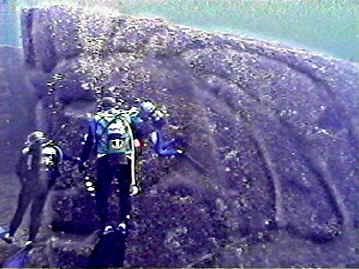
Showing posts with label Bagobo. Show all posts

Saturday, September 28, 2013

of Magellan, Zamal island, and the Golden Fleece

(This is in continuation with the previous blog, click here)

On the 16th of March, 1521, the Portugese explorer Ferdinand Magellan and his fleet of Spanish vessels finally reached the fabled island of Zamal in Mindanao of the Maharlikhan lands after 10 days of uneventful trip from the place he dubbed as Ladrones islands (Guam). Had the fleet sailed to Samar as conventionaly believed, the deep and treacherous currents of the Philippine Trench that they must traverse would surely twist and churn the wooden galleons making its harrowing crossing definitely far from uneventful, if the fleet dared that which, contrary to what mainstream history may had misled mainstream society to believe far too long, it less likely didn’t.

As the silhouette of the land of their destiny unfolded before them, the crew that had traveled halfway across the World to reach the place felt both excitement and foreboding, for these mysterious lands where lived the Maharlikhans, the Free Peoples, exuded both the enchanting, the danger and adventures, the promise of fabulous wealth that the ancients had since known as the Isles of Gold, and of myths and legends recounted through generations with celebrated voyage of ancient heroes of renown.

from http://developmentcatalyst.blogspot.com 


Magellan had deemed it prudent not to immediately dock in Zamal, for who among them knew of what fate awaited their place in history beyond those enigmatic shores and its ancient dwellers. Instead, he commanded to anchor overnight in the nearby island of Talikod. The island was dearth of water for neither rivers or creeks could be found, but like blessing poured from heaven would they discover two springs with the freshest, limestone filtered water springing forth its life nourishment even to this present day. As Pigafetta wrote hundreds of years ago, Magellan and his crew celebrated such blessing that greeted them and thus named it as the “Watering Place of good signs.” It was on this island that Pigafetta first reported sighting of the precious metal that they had traveled for thousands of leagues for: gold.

Two days after the fleet had docked, the native inhabitants on their bancas from nearby Zamal sought to interact with the pale-skinned visitors and their large wooden ships. Pigafetta mentioned how one of the inhabitants expressed “demonstrations of being very joyous at our arrival,”  while five of the “most showy” of the folks remained to interact with them. Indeed, the elaborately dressed original "Habirus" from the mainland, whom a historian once referred as the “most handsomely dressed” among tribes with their "habi" (weaving), had reasons to be very joyful.

Above the yonder mountain ranges of the mainland, the Habiru or Hebrew Tribe (later known as Bagobos after the Illuminati infiltrated colonizers in its divide and conquer strategy scattered instead into more than 100 tribes to relegate our ancestors from Indigenous to "indigent"), inhabitants that lived along the foothills and mountain ranges of the grand ancient peak, Mt. Apo that Pigafetta described as a “high land,” had their watchtower in Catigan that overlooked the vast Davao Gulf; vigilant village watchers must had seen the strange large ships that sought anchor in Talikod island near Samal, and so they traveled down to Davoh and crossed towards the island with their Sama brethrens to meet the visitors. Magellan, finding the natives to be gracious and reasonable, offered gifts and in return his crew were given provisions as figs a foot long (bananas), umai (rice), the highly versatile coconut that the locals called cochi from where sourced sweet water, oil, meat, vinegar, and of course wine.

from http://isabellesofia.wordpress.com/tag/filipino-tribes/
Long had the ancient Bagobo / Habiru tribe waited through the ages with the prophecy of their ancestors who spoke of offsprings of the very first children, their long separated brethren that traveled to faraway lands conceived from their foreparents, Humanity’s first man and woman, Toglai ang Toglibon, who shall one day return. That eventful day had come, the offsprings had finally reached the Maharlikan lands. The prophecy of their ancestors was finally fulfilled, and they were very joyous indeed (albeit the offsprings wearing paler skin). 


Eventually, Pigafetta was told of the small island adjacent of Samal where they first sought to land, presently known as Talikod island, by its ancient heavy set name, Humunu. As old as it sounded, the word may had been a remnant language of an extinct, unusual race that once lived in nearby Samal island and wrought havoc among the mainland inhabitants, and even of ancient heroes of yore from faraway lands lost in their voyage thousands of years ago. This mysterious, long extinct tribe was known as the Dinagat; they were the ancient race of giants of whose skeletal remains have even been discreetly dug up and witnessed by not a few people in modern times, their first hand testimonies attest that indeed such entities had once existed.


Pigafetta by then had amassed further knowledge of the scenic geographical vicinity of the Davao Gulf. He later found out that the Samal he initially saw was “not large,” hence it dawned that it was indeed an island surrounded by the “circumjacent islands” of Davao Gulf. The natives also referred to the island as Zuluam, attesting the influence of the Sultanate of Sulu on this side of Mindanao by the 16th Century. By this description of Pigafetta the mainstream position of Samar where Magellan allegedly landed should further be challenged for unlike Samal island, Samar was definitely not a separate but rather an integral part of one of Visayas’ largest islands, hence Pigafetta could never describe the latter as such for it will contradict his statement being “not large,” which de facto CORPORATE mainstream history had erred all along.

from http://samaloutrigger.lakbayjuan.com
Such error committed had misled generations of Humanity and reduced de facto CORPORATE mainstream history to misdirected position, particularly on the argument that after Samar, Magellan performed the first mass in Limasawa island. It was in 1667 that an alleged Jesuit “historian,” Francisco Combes, may had turned out the culprit. Neither in any earlier documents before Combes would there be heard the name Limasawa. In fact ,it was another Jesuit priest, Fr. Francisco Colins who coined the word in Visayan as he pointed to an island as “Dili Masaua” meaning NOT Masaua (the real Mazzaua was in Butuan, still in Mindanao). Unfortunately the term was misinterpreted by Manila-centric, non-Visayan speaking “historians,” timid to not even scrutinize its veracity  and so stuck unchallenged by prevailing mediocrity in mainstream with warped version established as historical “fact.” As if such twisted contribution were not enough, Combes neither mentioned of any mass held and, despite how Pigafetta otherwise admirably described the Zamal natives to be “with very good manners and gracefulness,”  the contemptible Combes branded them as “barbarians” instead. Worsened still by mediocre mindsets, no considerable figure dared to even challenge the unceremonious and inaccurate description of our noble ancestors by an incompetent Spaniard for nearly 400 years.

A few days ago this blogger encountered an acquaintance holding position as  president of senior citizens in his neighborhood, and informed of a priceless knowledge. During the early 90’s an old man from an Indigenous tribe whom he befriended revealed to him of a marker in Talikod island since the Spanish era. Could this be the certain marker that etched the place where Magellan may had landed? How could the ancient knowledge of this old man and his people be unceremoniously ignored by mainstream academe?  For mainstream historical institutions in this country that deliberately ignored the ancient knowledge of Indigenous Peoples especially in Mindanao, such mediocre, unwitting gestures are deserving of contempt.

from http://newsinfo.inquirer.net/451195/doj-readying-cases-vs-owners-of-structures-along-metro-manila-waterways
And so by misdeeds of irresponsiblity and warped sense of history the implications even through the present saw this country reduced with dysfunctional society recently beset with political corruption of unprecedentend level with self-serving politicians voted by an electorate reeking in mediocrity, its history lessons relegated to superficial colonial mentality and ignorance even to its otherwise rich pre-colonial history, its sense of ethics and values eroded by moralistic hypocrisy, a populace maleducated, a system even manifesting the unjust, blasphemous gap between extremely rich and extremely poor with the former behaving like crass necolonialists over their own fellow countrymen worse than foreign counterparts, a dilemma manifesting in a country that sinned for unwittingly disregarding the sense of historical foundation of its ancestors, and instead timidly aped misaligned foreign dictates.   


More than two decades since Magellan’s fleet landed in the island of Humunu near Zamal, the otherwise blessed, enchanting lands would then been christened by the Spanish commander Villalobos as Las Islas Filipinas eventually to be known as Philippines, in endearment to the Spanish empire’s crown Prince, Philip II. It should be noted that Philip II, then as child prince was the direct descendant of Philip the Good, Duke of Burgundy, and the founder of the Order of the Golden Fleece. The members of this elite Order included illustrious, select figures of European knights, royalties and eventually in the present with kings even from distant lands, which the King of Thailand was also a member of.
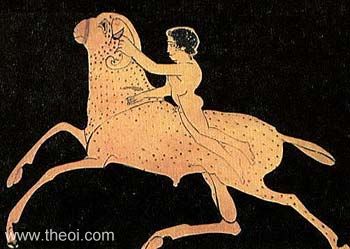


Phrixus & the Golden Ram | Athenian red-figure pelike C5th B.C. | National Museum, Athens
from http://www.theoi.com/Ther/KriosKhrysomallos.html
Indeed Magellan knew his destination having been tasked by the Monarchy of Spain to accomplish the daunting feat of reaching the very edge of the known World on uncharted waters, as if reminiscing back the travails of ancient heroes of Western civilization to exotic lands at the edge of the Earth, etched in collective memory for thousands of years with the likes of Jason and the Argonauts and their quest for the Golden Fleece (they were said to have explored continental Asia on their next expedition), of Odysseus and his fleet of ships from the Trojan war lost in voyage, the adventures even of encounters with a cyclops giant on an enigmatic island who guarded the Golden Fleece; the long years of their journey had dragged them farther beyond the edges of unknown worlds and into the enchanting places, and most likely to the isles of Maharlikhan lands.
By the accounts of ancient Greek legends the Golden Fleece could be traced back for thousands of years to the classic golden age where magic and enchantment were as real as breathed air, where gods once roamed down to the world of mortals and played with their fleeting lives as children would with toys, and where giants once wreaked havoc on frail humans.


These ancient foreign travelers may had once established here and brought fame to the Maharlikha lands even during the time of Solomon and his famous gold mines of Ophir located possibly north of Mindanao in the ancient Kingdom of Butuan, of whose glitter graced the temple of Jerusalem. Yet, the offsprings of these ancient seafaring peoples from distant lands may still had existed to this very day, its sprinkling of Hebrew, Greek, Etruscan words still surviving and spoken by the enigmatic Eskaya tribe of Bohol, nearby across in Visayas region of the Maharlikan lands.

photo by CORBIS
In the ancient land of Chryse, the Isles of Gold as the Greeks had known for thousands of years, there existed an island very rich in history, mystery and treasures that its legendary inhabitants were said to be so proliferously blessed with gold such that they decorated their houses with it, of a fearsome ancient giant race that once roamed on its hills and shores and tasked by the gods to guard the elusive Golden Fleece, of golden secrets known only from among the privileged few that had captivated monarchs, knights, and even civilizations for millennia of years. The island was then known as Zamal, for no other place in the ancient World could attest of such fame and profoundly rich history, wealth and heritage as this island itself, in the land of the Maharlikhans.

It was in the ancient, rich, enchanting island of Samal in Mindanao in the Kingdom of Maharlikhans that Magellan knew where he shall go.

Wednesday, September 4, 2013

Had Magellan first seen Zamal, Mindanao on March 16, 1521?!

This is a continuation of the first blog that, with the advent of the information Age, will further challenge the conventionality of mainstream history that may had misled and kept in the dark generations and partly cause the lack of foundation, a dysfunctional state this country seemed to be manifesting, far too long.

Mainstream history had always taught that on 16th March, 1521 Ferdinand Magellan first landed in Samar in the Maharlikan lands eventually known as Philippines. This will be contested.  In the first place it would be highly improbable for Magellan’s Fleet to had landed in Samar in Eastern Visayas as the wooden galleons before reaching the island, would had to hurdle the treacherous waters of the Philippine Trench, so deep that the waters continually twisted and churned due to its ocean currents (deeper than Mt. Everest), virtually rendering any 16th Century wooden ship less likely to survive the treacherous waves wrought by its depth.


Yet, Magellan’s voyage of ten days from the Ladrones Islands i.e. Guam to the island of “Zamal” was so peacefully uneventful that it least likely encountered the twisting currents of the Philippine Deep. Even the ocean Magellan had named as “Pacifico” due to the relative calmness of the waters. The said “Zamal” island that Pigafetta described could not be Samar in Eastern Visayas that had to be traversed from the deepest ocean trench and its treacherous currents, but on tranquil seas towards Samal island in Davao Gulf, Mindanao.

Pigafetta’s description of the vicinities of Zamal so eerily described exactly as the Davao Gulf area would be witnessed, replete with the nearby island (present day Talikod island) with its refreshing spring, a visible highland (Mt. Apo), and surrounded with circumjacent islands (Davao Gulf).

courtesy of RandyHi.com

Even the then uninhabited nearby island beside Zamal that Magellan’s fleet docked fitted accurately with Pigafetta’s description, for gratefully they found springs of very fresh water on the island and thus called it the “Watering Place of Good Signs”. In nearby Talikod island, water was a scarce resource for its lack of rivers and creeks except for the spring of fine water, gushing forth even to this day and presently located in the modern town proper.

Disregarding the mediocre mainstream belief that Magellan’s wooden super-galleons miraculously survived after crossing the deep and treacherous currents of the Philippine Trench as easily as his crew eating cochi nuts and drinking tuba with the natives; Magellan’s galleon fleet were, in a more realistic scenario, admirably swift as to be able to traverse from Guam to Samal Island in Mindanao for mere 10 days. It would not be surprising afterwards then, owing to the favourable windy characteristic of the area, that the fleet enabled to travel from Samal of Davao Gulf, to travel along the Eastern edges of Mindanao island with present day Davao Oriental, Surigao del Sur, del Norte and on towards the tip of present day Surigao City- in just a single day.

Hence originating from Davao Gulf, Pigafetta dutifully recorded sightings of the four islands.  Had Pigafetta’s fellow crew travelled from Samar and not Samal, the islands were a no-show. And so in a single day, from the tip of Surigao the fleet proceeded “west and southwest” not to Limasawa, but towards Masao, Butuan and still in Mindanao. Masao centuries ago would had been formed as an “islet” that not unusually accumulated especially along the wide river deltas as it approached the seas, and Butuan River was not an exception. Masao then was once an islet that formed from the delta of the mighty Butuan River.


Speaking of Limasawa, yet another ridiculous twist of blunder centuries in scale seemed to had been played upon this country’s history. Upon analyzing the preposterousness of a faraway island once thought of as Pigafetta’s Mazzaua, someone must had exclaimed in vernacular, “Dili Masaua!” (not Masaua!). As mediocre as picking an island as well as picking vernacular words, mainstream  historians therefore sang in unison, out of tune definitely, and thus declared the misrepresented island officially as, er, Limasawa. And the rest was bungled history.

Preposterous indeed, and anybody inquisitive enough may be excused for the initial hysterics. For how could the king brothers Rajah Siagu and Rajah Kulambu from the kingdoms of Masao and Butuan, and Caraga, went on regular leisure hunting trips from the Mindanao kingdoms to the alleged faraway Limasawa island but to ride some 16th Century high speed ferry, not to mention Pigafetta and Magellan’s crew regularly traversing from the island to the Rajah’s kingdom, unless on ancient speed boats. What epic bungees.


Furthermore, the names assigned to the islands by who knows who that surrounded “Limasawa” in Samar seemed to sound like pieces of a jigsaw puzzle. Unfit, unfortunately. There were the islands of Homonhon, Dinagat, Sarangani. However, when placed in the context of Samal Island these names would immediately align and make sense like a seafarer’s compass would to the North pole.

As the native inhabitants were appropriately described, Pigafetta specifically mentioned of already civilized natives, respectful and hospitable, with “very good manners and gracefulness,” and with some of the “more showy,” elaborately dressed as well. The inhabitants of Samal Island were a very ancient race, so ancient that their olden history had recorded the existence of giants called the DINAGAT whose skeletal remains had been discreetly found even to this day
 (for more information on the Samal giants refer to links here and here).

The other ancient name of Samal Island was PU, because accordingly the earliest tribes (Maharlikhan) prior to its diaspora or scattering to the various corners of the World, encountered Samal as the very first island, or “pulo” that they had seen. This further vindicated the belief of the Bagobo Peoples in the nearby Davao mainland, which narrated that the source of all tribes of the World originated from Cibolan in the foothills of the Grand Old Man, Mt. Apo (link here).  From the creation myth of the Bagobo Tribe the first man and woman Toglai and Toglibon bore their very first children who eventually separated and scattered throughout the World. It was then prophesied that in the distant future the offsprings of these separated children shall return back to their land of origin, to the land of the Maharlikhas. It needed also to be mentioned that the Bagobo’s of mainland Davao were famous for their elaborate costumes that a foreign explorer once referred to them as “the most handsomely dressed” among tribes, and such impression was similarly witnessed by Pigafetta.

(By further resarch, the ancient Egyptians preserved in hieroglyph that portrayed the ancient "Habirus" with intricate weavings, known locally as "habi.") 

By the time of Magellan’s arrival the island of Samal would considerably be populated by then as now, for on the other island Samar it was otherwise sparsely populated even today that made the possibility of his galleon fleet’s first landing there ludicrous still.

The Sama people were accustomed to hospitable interaction as the fame of the ancient island with its rich history that dated even since the ancient era of giants then known as the Dinagat, and its cosmopolitan culture attested of a place already renowned in this part of the ancient World, for even Magellan knew of its mystery, so spectacular and fantastic as it turned out to be known only by elite members of European knights and monarchy and whose fame may had been dated since the legendary heroic journeys of ancient Greeks, which this blogger will soon discuss.

This writer also had the privilege to hear from the very words uttered by the governor of the country’s Indigenous Tribes, in an air of mysterious, metaphysical phenomenon that mirrored a living culture spanning thousands of years, of 5 languages that he claimed to speak. With these languages he had amazing and profound communication with the Tibetans, with Muslims who could understand the Aramaic language of Mohammed, and the more mysterious of tongue I had heard, the ancient language of the giant race. From what this writer recalled the intonations of this ancient language somewhat produced characteristic sounds of something deep, guttural, heavy. Pigafetta mentioned of the island beside Samal as “Humunu,” and eventually, HOMONHON. Could this deep, heavily accented word be remnant of the ancient language of the Dinagats of Samal, the giant race?

Pigafetta also narrated about the interesting reaction, not to mention the generous hospitality of the natives upon their encounter “with demonstrations of being very joyous with our arrival”. The inhabitants of Zamal indeed had reasons to be very joyous, for as the prophecy of the Bagobo elders foretold that the children of their once separated brethren would soon return, the offsprings, paler in skin, had now arrived.  The prophecy was finally fulfilled.

It comes as a boggling mystery why mainstream history would deliberately divert the real places that occurred in history.  As the cliché goes, histories are written by victors.  But what if the real events that occurred did not necessarily follow the tale of the “victors”, but actually led instead to its humiliation?

By these accounts, rewritten, the mystery would then unfold. And reveal.


Magellan, on a specific mission in search of the “isles of gold” as tasked by the Spanish royalty, ultimately found the fabled “Zamal” island of whose legends enthralled since the ancient Greeks, ultimately found on the edge of the once unknown Pacific seas, in the presently known Davao Gulf, in Mindanao of the Maharlika lands. From Samal island he sailed to Zugbu, eventually to Mactan and encountered formidable Maharlikan warriors, leading them the son of Rajah Luisong Tagean of whose name Luzon island was christened. Like ancient heroes in a tragic tale, with the Maharlikan Rajah Lapulapu and his warriors, Ferdinand Magellan ultimately met his fate.


The Spanish Empire in its quest of subduing and colonizing foreign lands and in particular the legendary isles profuse with gold, despite the tragic loss of the great explorer, deemed it valuable to send a second fleet known as the Loaisa Expedition. Tracing still the original route of Magellan the next Spanish fleet arrived not in Sangir, Indonesia nor Sarangani, Leyte but expectedly back to Davao Gulf, this time in SARANGANI island, Mindanao.
The ancient Sarangani natives, with its rich history dated as old as 3000 years, already sensed the ulterior motive of the pale skinned foreigners with such hearts borne from greed and covetousness that deemed more alien than brethren. The Sarangani inhabitants pretended to welcome the intruders as their Samal brethren otherwise genuinely did. This time however, from behind the offerings of vials and drinks, bladed weapons stealthily hidden behind the warriors’ backs awaited the intruders. By the time the bloody rampage ended, only four survivors were left, found floating in the seas by a passing galleon of the rival Portuguese, and promptly arrested.

Magellan had crossed the unknown Pacific seas as commissioned by the Spanish royalty in the grand quest to find the fabled islands of gold. He eventually discovered the illustrious Samal island in Davao Gulf. But his defeat borne from arrogance at underestimating the Maharlikan Rajah Lapulapu and his determined men, ultimately proved fatal and dealt a slap to Western imperial face. The second expedition with a crew that betrayed covetousness travelled on the same route and found itself again in Davao Gulf, this time in Sarangani island, where a second costly defeat in the hands of Sarangani Maharlikans proved too much for the Castillan imperial ego to bear. It seemed the true history of the land had to be twisted and re-written, not due to victory, but humiliation.


And so there would be need to clamour for the rightful quest to seek for what had indeed transpired, for in its light will surely reveal answers to long held questions, and in finding the real treasures of Truth long hidden, victory finally prevails.


(Continuation of the topic in:
of Magellan, Zamal Island, and the Golden Fleece) 


Sunday, January 29, 2012

Personal Researches on Lemurian Timeline


This is a milestone in my personal research. But will consider it as Speculative. there are still probabilities as Many Worlds Theory, Parallel Dimensions, even Synthetic Universe.

Will call it Ric Vil Hori's Research on Lemurian Timeline from Paleozoic Era and up to the Present:


http://www.bibliotecapleyades.net/atlantida_mu/esp_lemuria_3.htm

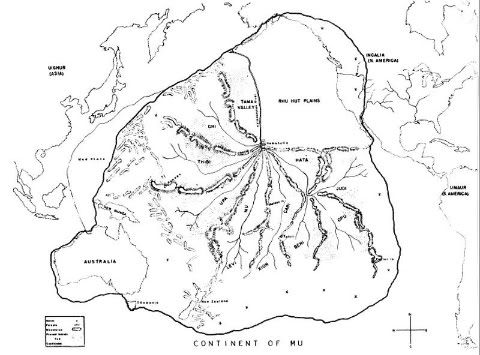
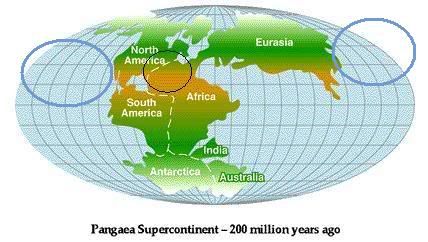
The Map of MU/ Lemuria as shown, manifested the legendary supercontinent in contemporary with the Pangaea supercontinent during the Palaeozoic Era more than 250 million years ago and prior to the Permian-Triassic Extinction Event and the Continental Drift. The early inhabitants of Mu/Lemuria were a hermaphroditic race as narrated by the ancient knowledge of the Indigenous B'laan Tribe of Mindanao Island, Philippines and also by the ancient Greek philosopher Socrates as narrated by Plato. Mammalian species evolved only in the later Cenozoic era.


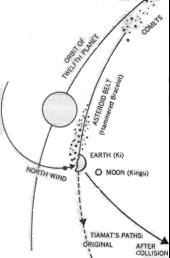
The Permian-Triassic Extinction Event occurred about 250 Million years ago after a complex series of conflicts ensued between Lemurians and another Alien race (said to be Dracos) as narrated by Mindanao's B'laan Tribe and by Socrates, which resulted to genetic splicing of male-female genders, relegation, lowering to denser dimension with the eventual involvement of another force, as narrated by Mindanao's Samal Tribe with its genesis, by ancient Sumerians, and the interplanetary collision as interpreted by Zechariah Sitchin and Immanuel Velikovsky. I highly suggest that the catastrophic formation of the Asteroid Belt may have occurred during this era, which may partly explain the presence of carbonaceous component found in C-Type asteroids manifested during the planet's Carboniferous Period about 360 to 290 million years ago prior to the collision. The catastrophic Extinction event nearly extinguished almost all life during this era, also known as the Great Dying. Surviving Lemurians may have escaped deep underground, with fragments of the Lemurian continent still existing. Other species such as coelacanths, cockroaches, also survived.


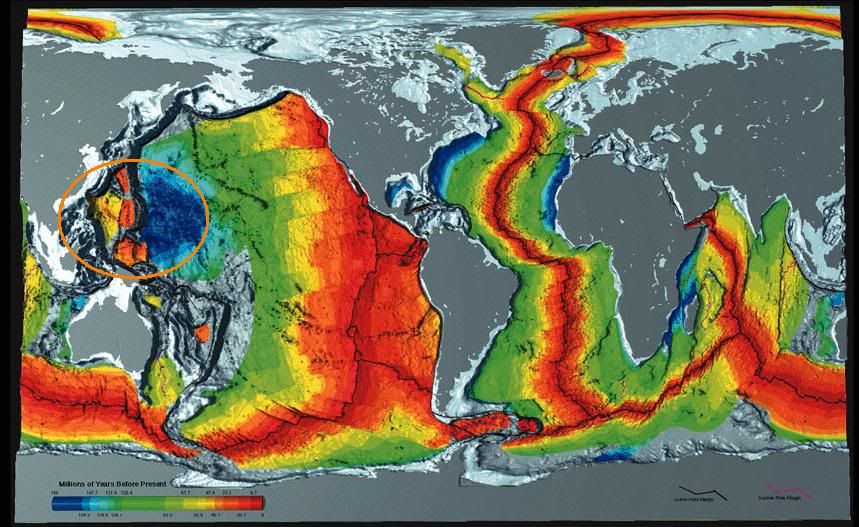
The Continental Drift occurred spanning 225 to 65 million years ago and Pangaea gradually transformed into the present day continents to heal the "wound" that destroyed a large portion of the MU supercontinent caused by the collision, through the wonders of gravity by the "Planet's Core Consciousness" similar to how in microcosmic level spherical shaped water behaves in zero gravity. In this light, the Expanding Earth Theory should be refuted.


New species began appearing, which was further enriched by water from priori-Mars after its front surface was bombarded by fragments from the catastrophic collision, as narrated by Mindanao's Manuvu creation mythology and interpreted by Velikovsky (minus his erroneous timeline). The first mammals appeared (and later evolved into apes) during the Triassic Period about 245 to 208 million years ago and flowers began appearing during the Cretaceous Period about 146 to 65 million years ago.


The Cenozoic Era approached about 65 to 1.6 million years ago. The Philippine archipelago began forming through the geological process Subduction (mostly during the Cenozoic -Tertiary/Quaternary Period starting about 65 million years ago). Mindanao Indigenous People's Mythology narrated Human Creation with Addan and Eba who were Created to be MAHARLIKA, meaning Noble, FREE CREATION (Earth Humanity being borne both from Evolution and Creation). Homo sapiens fossilized teeth aged 400,000 years ago were discovered. The remaining fragments of Lemuria sank sometime about 15,000 - 20,000+ years ago in consonance with the galactic wide phenomenon known as the Photon Belt, with sunken remnant of a possible ancient Lemurian city eventually found in Yonaguni, Japan during the 20th Century in the year 1987, also edifices such as the Gunung Padang Pyramid in Indonesia dtaed as much as 20,000 years old or more, Nan Madol in Micronesia, Banaue Rice Terraces in Philippines, the Moai statues of Easter Island, etc.

Sunday, November 6, 2011

Saturday, October 29, 2011

the Bagobo People's shall be vindicated


The ancient knowledge of the Bagobo Peoples of Davao and Mindanao, preserved and nurtured through the ages their ancient claim that Cibolan River of Apo Sandawa, was the cradle of Human civilization, SHALL BE VINDICATED.

I had discovred from personal research that the term "Cibolan," remembered just as our Bagobo brethrens said they would, by its scattered children from Negros to as far as the American continent by the Native Americans, was a word not even originating from the latter, but from the language of the Dravidians of southern India and of our Pilipino ancestors!

"Cibolan" comes from the Dravidian / Pilipino root words civ-pola, meaning "golden city" or "city of reds."

The ancient Laguna Copperplate Inscription revealed that our ancestors had used the ancient, old Javanese language of Kavi.

The mystery is finally revealed, the distant liink between the Native Americans of the American continent, the Bagobo People's of Southeast Asia, and ancient India of South Asia are finally meet and my personal research has turned full circle, through the ancient languages of the Sri Vijaya Empire, Kavi!

Kavi, or Old Javanese is a branch of language that developed from the Dravidian languages of southern India!

Pola in Pilipino language, means "Red". Gold in its state of high quality, is reddish in color.


Dravidian languages are spoken by about one-fourth of all Indians, overwhelmingly in southern India. Dravidian speakers among tribal peoples (e.g., Gonds) in central India, in eastern Bihar, and in the Brahui-speaking region of the distant Pakistani province of Balochistan suggest a much wider distribution in ancient times. The four constitutionally recognized Dravidian languages also enjoy...

•Indic writing systems (in Indic writing systems)
A southern form of Brahmi developed into the Grantha alphabet, from which in turn the writing systems of the Dravidian languages of southern India (e.g., Tamil, Malayalam, Telugu, and Kannada) as well as the writing systems of the Sinhalese language of Sri Lanka, the Khmer and Mon languages of Southeast Asia, and the Kavi, or Old Javanese, system of Indonesia were developed. The Thai writing...


However, the Native Americans pointed the direction to the Spanish Conquistadores that ancient Cibola, the City of Gold, the fabled El Dorado, to the north of presently known Mexico. How could the Bagobo Peoples dare to claim that ALL tribes in the World originated from Cibolan River of Mt. Apo, when Davao is riduculously too far away from "north of Mexico" ?!?

Ridiculous indeed, or so it seemed...


...Until one clicks on the previous blogs:

Did ancient Humanity Originated from the Foothills of Mt. Apo?
Of Davao's cibolan River, American Indians, and "Golden City"
Further Proofs for my "Cibolan Theory"

Wednesday, December 2, 2009

Our Origin was much older than biblical Adam and Eve!

My post in a thread from topix.com:


The claim by the threadstarter is least likely.

The Israelites were a different breed tracing their origin from biblical Adam and Eve. Pinoys however, despite the ignorance, should trace their origin very much older than that, in fact so old Plato's narrative of Humanity's ancient ancestors prior to the creation of man-woman coincided with the creation myth of the B'laan, an indigenous tribe in Mindanao!

However, the predecessor of the ancient B'laans, the Bagobos of Davao, revealed something more profound, they claimed ALL THE WORLD's TRIBE originated from the foothills of Mt. Apo!, and they even predicted the arrival of the Spaniards and Americans!


This may sound preposterous until one incorporates the very ancient, lost continent of MU or Lemuria so profoundly vast and located in the present Pacific area, as this was the ancient motherland of Plato's olden ancestors as coincided with the B'laans! and there are proofs that Mt. Apo grew out from its seas most likely by the time Lemuria sank in the waters. And there was recent discovery of underwater ancient city believed to be Lemurian in Yonaguni, Japan!


It had been said that when all races in the world whether white, black, yellow, red, etc. would be genetically mixed up, the result would be Brown!


However, there may be connection between ancient Israelites and pre-colonial Philippines, because many researchers believed that the gold laden land of Ophir from where Solomon's gold came from as mentioned in the Bible, may be located in Mindanao, particularly in the Butuan-Surigao area! In fact there were discoveries in Surigao of ancient pre-colonial gold ornaments (10th-13th century AD) so intricate and excellently done it could easily be one of the ancient world's best! It was shown on TV by Probe Team and is now presently exhibited in Ayala Museum.


(close-up view showing excellent craftsmanship of "Gintong Sablay," an ancient Hindu inspired gold ornament that weight about 4 lbs. found in Surigao and dated from 10-13th century pre-colonial era.)

No, we didn't come from Israelites because our ancient legacy is much more profound and very much older than that!

Unbelievable? that's because as mentioned earlier, you were kept ignorant by forces that did not want you to know.

Now you know.

Thursday, November 12, 2009

my reply to albertus magnus

My personal reply to albertus magnus from pinoyexchange.com


"Mitochondrial genetic studies proving the single
origin of modern
Man...[url]http://www.bradshawfoundation.com/stephenoppenheimer/reading.html[/url][url]http://www.newstatesman.com/blogs/paul-rodgers/2008/05/sundaland-spread-taiwan[/url][url]http://en.wikipedia.org/wiki/Mitochondrial_Eve[/url][url]http://en.wikipedia.org/wiki/Recent_African_origin_of_modern_humans[/url][url]http://www.youtube.com/watch?v=tlRSsvB4iLE&feature=fvw[/url]
But civilization, the birth of agriculture or the domestication of animals
and plants or the transition from a hunter-gatherer lifestyle to an agricultural
society happened in the Eden in the East as Oppenheimer termed the Sundaland
during the last Ice Age. And the deluge or the rising of sealevels occuring gave
birth to various deluvial myths and motiffs on various cultures like the
allegorical Noah's flood.Various theosophists, masons, mystics, members of
esoteric circles have all believed in Lemuria, a sophisticated civilization, as
the Mu, or Motherland. Which scientists like Oppenheimer and Solheim equates
with Sundaland. Some occultists picture the extent of Lemuria even occupying the
expanse of Pacific ocean just like what visionarylink had posted. This could be
the etheric or even the astral equivalent or correspondence of the terrestial
Lemuria. So the first Lemurians were higher dimensional beings inhabiting higher
dimension or etheric Lemuria not yet fully physical beings as occultists say.
But sooner in the allegorical Fall of Man, they become fully corporeal carnal
beings.
"


Perhaps it would be a revelation to take a second look at the origin mythology of the Bagobo peoples, and with this, based on on the probable map shown by a certain society on Lemuria, the presence of Mt. Apo must have possibly helped in surviving a portion of ancient Lemuria. It should also be noted that Mt. Apo is home to some endemic flora and fauna species originally found only in the area, such as the orchid Waling-waling and the Philippine Eagle. Having trekked to Mt. Apo years ago, I did notice something strange because thousands of feet above sea level there was actually an intriguing spot where white sands similar to those found in the beaches abound, and so do limestone boulders. these may imply that many many years ago, a portion of the majestic peak may have risen from the seas.

I have also noticed among the Bagobo peoples, they were an intriguing mix of features, for other than the usual Malay look, some of them did manifest Caucasian phyical characteristics. The late mayor of Davao City during the 70's or 80's (I actually met him when I was a kid, and I remembered fully well his countenance), Mayor Elias Lopez was actually a Bagobo but he had seemingly caucasian features also, tall and light skinned. I did inquire with a Bagobo househelp about the caucasian features of some of their peoples and she replied "they (ancestors) were the original natives." When I saw her mother, she also featured light skin tone in contrast to her dark tone. Perhaps it may have something to do with the relation between genetic evolution and Consciousness. Among the indigenous peoples of Mindanao, one actually notices varied mix of ethnic features and could identify the brown, white, black ethnicity from among them. Individuals from the anthropological and historical fields from the country (just make sure not the usual local mediocre lackeys and apers for foreign interest) or from Asia and even from around the world, should give great attention regarding these, especially with the myth of origin by the Bagobo peoples and its possible link with ancient Sundaland, or Mu. Who knows, the discovery may hold clues to the missing key as to the origin of the world's tribes, and it's right over here.

Regarding the black race, I also made personal research and the ancient Sumerians narrated in detail their origin in south Africa and its relation to gold mines (there were recent discoveries of mining artifacts dated hundreds of thousands of years). I once read a little information that the ancient black peoples revolted from their slavery against the "gods." However, I believe the theory on Lemuria may still be very much older in scope.

Saturday, November 7, 2009

Did Humanity's ancient Tribes originate from the foothills of Mt. Apo?!

Mt. Apo, Mindanao, Philippines


This may seem a prequel to the previous blog that I posted, albeit with an even more fantastic twist, and a far larger scale at that.

Scenic Mt. Apo is the country's highest peak, majestically towering over the vast expanse of the southern tip of Mindanao island bordering over the mountainous edges of Davao City. However, the ancient narratives of an indigenous people that lived along its mountain ranges, the Bagobo tribe (they also named the peak, which means "grand old man"), bespeak about a fantastic claim that the names of ALL of Humanity's tribes supposedly originated from the foothills of this majestic peak!

Here is the Bagobo account:


Origin
Bagobo (Mindanao)


In the beginning there lived one man and one woman, Toglai and Toglibon. Their first children were a boy and a girl. When they were old enough, the boy and the girl went far away across the waters seeking a good place to live in. Nothing more was heard of them until their children, the Spaniards and Americans, came back. After the first boy and girl left, other children were born to the couple; but they all remained at Cibolan on Mount Apo with their parents, until Toglai and Toglibon died and became spirits. Soon after that there came a great drought which lasted for three years. All the waters dried up, so that there were no rivers, and no plants could live.

"Surely," said the people, "Manama is punishing us, and we must go elsewhere to find food and a place to dwell in."

So they started out. Two went in the direction of the sunset, carrying with them stones from Cibolan River. After a long journey they reached a place where were broad fields of cogon grass and an abundance of water, and there they made their home. Their children still live in that place and are called Magindanau, because of the stones which the couple carried when they left Cibolan.

Two children of Toglai and Toglibon went to the south, seeking a home, and they carried with them women's baskets (baraan). When they found a good spot, they settled down. Their descendants, still dwelling at that place, are called Baraan or Bilaan, because of the women's baskets.

So two by two the children of the first couple left the land of their birth. In the place where each settled a new people developed, and thus it came about that all the tribes in the world received their names from things that the people carried out of Cibolan, or from the places where they settled.

All the children left Mount Apo save two (a boy and a girl), whom hunger and thirst had made too weak to travel. One day when they were about to die the boy crawled out to the field to see if there was one living thing, and to his surprise he found a stalk of sugarcane growing lustily. He eagerly cut it, and enough water came out to refresh him and his sister until the rains came. Because of this, their children are called Bagobo.


http://www.pitt.edu/~dash/creation-phil.html#origin

The question may sound preposterous even from among locals here, furthermore exacerbated by mainstream education on history unwittingly patterned after previous colonial-based systems that will less likely hint of otherwise locally rooted but ancient phenomenon, having been very dependent on Western-biased sources and interests rather than that of the East or this country's.

Ridiculous it may seem to be, for how could "obscure" Mindanao from among more than seven thousand clusters of archipelago islands, in a country so miniscule to compare with other huge land masses and countries of this planet, would dare claim what could have been a very important role in the forgotten annals of Humanity's history?

Or so it seemed. Unless one puts the ace on the table; unless one considers this very ancient, lost continent into the picture that existed, tens of thousands, hundreds of thousands, or even hundreds of millions of years ago, but forgotten or deliberately suppressed to a supposed "modern" but unknowing society.


According to ancient narratives and documents, there once existed a very powerful continent known as the land of MU, or Lemuria. Much older than the West's legendary Atlantis or the Biblical garden of Eden, ancient Lemuria once stretched 5000 miles long and 3000 miles wide somewhere in the Pacific Ocean, with a population that was said to reach 63 Million people over 200,000 years ago. Its peoples were a noble, highly advanced civilization adept at telepathy, astral travel, teleportation, until its eventual demise, and based on my personal research, partly caused by alien interference (the Greek historian Plato, through Socrates, and another Mindanao indigenous tribe, the Bilaan also narrated accounts of the said phenomenon). The ancient ancestors of great civilizations of ancient Egypt (with more probability of later connection with Atlantis) and the Meso-Americas such as the Mayas, were even said to be refugees of this great, lost continent that may hold clue as to the similarities of Asians with American Indians and Eskimos. In the image provided, the sketch that featured the probable location of Lemuria showed that Mt. Apo in Mindanao that the Bagobo peoples claimed where the names of all the world's tribes originated may be on the edged part of the ancient legendary continent. It had been said that the eventual disintegration of Lemuria transpired over a period of many thousands of years, with the final destruction that occurred thousands of years before that of Atlantis (about 15,000 years or more).

The Bagobo mythology also predicted that the lost children will return back to their place of origin. As mentioned in my previous blog, "Did the nation's ancient history originate from Southern Mindanao?", the early wave of settlers from Southeast Asia eventually arrived in Southern Mindanao about 500 AD, which through the years were followed by the arrival of other races from as far as Europe, America, and from other continents occurring even up to the present.