Monday, October 31, 2011

Magellan first saw Samal, Davao on March 16,1521??

quotes written by Pigafetta, from book "First Voyage Round the World by Magellan":

Saturday, the 16th of March, 1521, we arrived at daybreak in sight of a high island, three hundred leagues distant from the before-mentioned Thieves Island, This Isle is called Zamal(1). The next day the general wished to land at another uninhabited island near the first , to be in greater security and to take water, also to repose there a few days.


1. Samar? Or Samal?


The next day the general wished to land at another uninhabited island near the first,


Talikod Island??


These people became very familiar and friendly with us(1), and explained many things to us in their languageand told us the names of the islands which we saw with our eyes before us(2). The island where they dwelt is called Zuluam, and is not large.(3).

1. Samal Tribe?


2. Talikod Island, Davao City area, Davao del Sur, Compostela Valley, Davao Oriental?


3. Other name for Zamal or Samal Island?


The island we were at was named Humunu(1); nevertheless because we found there two springs of very fresh water we called it the Watering place of good signs, and because we found here the first signs of gold. there is much white coral to be found here, and large trees which bear fruit smaller than an almond, and which are like pines. There are also many pine tress both good and bad. In this place there were many circumjacent islands, on which account we named them the Archipelago of St. Lazarus, because we stayed there on the day and feast of St. Lazarus(2).


1. Talikod Island?


2. Davao Gulf area?


That same day (March 25,1521) we took the course between West and Southwest(1) and passed amist four small islands, that is to say, Cenalo, Huinanghar, ibusson and Abarien.(2)


from Samal, Davao they changed course "west and southwest" or 1. Northernmost tip of Mindanao in present day Surigao City?


2. Cluster of islands along Surigao del Norte area, Siargao, Dinagat, Liloan in Leyte, Limasawa?
(When viewed on their trip from Samal, Davao, these islands, esp. leyte did look "small" as the expedition viewed these islands by its tip!)


Thursday, the 28th of March, having seen the night before fire upon an island, at the morning we came to anchor at this island; where we saw a small boat which they call Boloto, with eight men inside, which approached the ship of the captain-general. Then a slave of the captain's who was from Sumatra(1), otherwise named Trapobrana, spoke from afar to these people, who understood his talk (2), and came near to the side of the ship, but they withdrew immediately, and would not enter the ship from fear of us.


1. from Sri-Vijayan empire?

2. "Lumad Visayan" - mixture of Old Malay, Dravidian Kavi, Sanskrit?


The island of this king was called Zaluan and Calagan(1), and when these two kings wish to one anotherr they come to this island where we were(2). Of these kings the painted one is called Raia Calambu, and the other one Raia Siani.


1. Butuan and Caraga?


2. Masao, Butuan?


It seemed that the Spanish expedition of Magellan, lacking in accurate geographical description of the area, tend to identify land masses surrounded by bodies of water as "island," Masao in Butuan seemed to be carved out from river delta that was perhaps misunderstood as "island."

If based on the mainstream historical claim that the first mass was held in Limasawa, Leyte, it's ridiculous for the Raja's of Butuan and Caraga to sail all the way to Limasawa to attend the first mass, unless of course if they chartered a fastcraft ferry for the special occassion, and for Pigafetta and Magellan's crew to visit his kingdom, for both Raja's to meet cordially for gamehunting, there must be regular schedules of fastcraft ferries for the Limasawa - Kingdoms of Butuan and Caraga route since 1521!! LOL

repost on the Samal People and Giants


Samal Island, or PU located in Davao Gulf  indeed had a very long history. In the ancient of times it had been said (partly read from researches by UP Prof. Fe Mangahas)  the island was once inhabited by giants called the Dinagat. These giants were abusive for they would raid villages (most likely along mainland Davao) and steal, vandalize (like defecating on their kitchen), and kidnap women and made sex slaves. Babies out of such abuse that were born giants were assimilated, those that remained human-size were rejected and separated with the kidnapped women to be their slaves.

The humans, fed up with the abusive giants, gathered together to device ways on how to get rid of them. They decided to deceive the giants by sending them delectable foods laden on a small boat. the giants upon seeing the boat, surmised it as offering of submission by the tiny humans and that the humans had finally conceded to their "superiority." The food however, was laced with poison.


The Dinagats only allowed all their fellow giants to partake of the food and prohibited human-sized slaves and the kinapped women to partake of the feast whom they treated as inferior class. All the giants were ultimately killed, except for the human-sized slaves, now Free. Thus the survivors called themselves "Samal," which said to be meant as dregs, or left-over.


However, there were indeed accounts of first-hand witnesses (local inhabitants, construction workers, treasure hunters) who discovered skeletal remains in Samal. Most of these discovered remains were stolen and unaccounted for. Even foreign scientists investigated the phenomenon. but mediocre nartional historical authorities (as they had, until recently, ignored the role of Mindanao legacy in mainstream history lessons ) outrightly dismissed these priceless gems of local history that could otherwise spell the difference to the dysfunctional state of this oligarch-dominated state and society.

Even the Sama's creation myth is very old, and eerily similar with the myths of the ancient Sumerians (Abraham's father was a Sumerian priest) supposedly the oldest civilization in the World, according to western historians that is. It was also intriguing that the bible mentioned about such giants most probably borrowed from Sumerian accounts, known as Nephilims, borne of angel (read: Extraterrestrial) and human parents.

Saturday, October 29, 2011

the Bagobo People's shall be vindicated


The ancient knowledge of the Bagobo Peoples of Davao and Mindanao, preserved and nurtured through the ages their ancient claim that Cibolan River of Apo Sandawa, was the cradle of Human civilization, SHALL BE VINDICATED.

I had discovred from personal research that the term "Cibolan," remembered just as our Bagobo brethrens said they would, by its scattered children from Negros to as far as the American continent by the Native Americans, was a word not even originating from the latter, but from the language of the Dravidians of southern India and of our Pilipino ancestors!

"Cibolan" comes from the Dravidian / Pilipino root words civ-pola, meaning "golden city" or "city of reds."

The ancient Laguna Copperplate Inscription revealed that our ancestors had used the ancient, old Javanese language of Kavi.

The mystery is finally revealed, the distant liink between the Native Americans of the American continent, the Bagobo People's of Southeast Asia, and ancient India of South Asia are finally meet and my personal research has turned full circle, through the ancient languages of the Sri Vijaya Empire, Kavi!

Kavi, or Old Javanese is a branch of language that developed from the Dravidian languages of southern India!

Pola in Pilipino language, means "Red". Gold in its state of high quality, is reddish in color.


Dravidian languages are spoken by about one-fourth of all Indians, overwhelmingly in southern India. Dravidian speakers among tribal peoples (e.g., Gonds) in central India, in eastern Bihar, and in the Brahui-speaking region of the distant Pakistani province of Balochistan suggest a much wider distribution in ancient times. The four constitutionally recognized Dravidian languages also enjoy...

•Indic writing systems (in Indic writing systems)
A southern form of Brahmi developed into the Grantha alphabet, from which in turn the writing systems of the Dravidian languages of southern India (e.g., Tamil, Malayalam, Telugu, and Kannada) as well as the writing systems of the Sinhalese language of Sri Lanka, the Khmer and Mon languages of Southeast Asia, and the Kavi, or Old Javanese, system of Indonesia were developed. The Thai writing...


However, the Native Americans pointed the direction to the Spanish Conquistadores that ancient Cibola, the City of Gold, the fabled El Dorado, to the north of presently known Mexico. How could the Bagobo Peoples dare to claim that ALL tribes in the World originated from Cibolan River of Mt. Apo, when Davao is riduculously too far away from "north of Mexico" ?!?

Ridiculous indeed, or so it seemed...


...Until one clicks on the previous blogs:

Did ancient Humanity Originated from the Foothills of Mt. Apo?
Of Davao's cibolan River, American Indians, and "Golden City"
Further Proofs for my "Cibolan Theory"

Friday, October 28, 2011

repost of my research on Ophir

Been a long time since I last posted, having to be with a mediocre society that put in position an incompetent oligarch puppet as national leader out of mudslinging, ignorance and hypocrisy can be so uninspiring. However, we shall go on.

This is a repost from another website, of my research on Ophir:


This is what I discovered culled from personal research about the ancient land of Ophir and how I had it traced in our archipelagic islands, possibly in Mindanao.

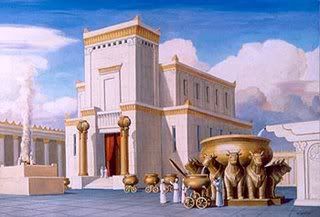
During the bloody Crusades with the capture of Jerusalem by the Knights Templars on the 11th Century, the Knights while searching for relics from the ancient city discovered the treasure map of Solomon that detailed the location of the gold mines of biblical Ophir whose gold were said to be used in the building of Solomon's temple.

By the 14th Century the Templars, declining in influence with unsuccesful campaigns against the Muslim world and the recapturing of Jerusalem by the Turks in the 13th century, were persecuted by the King of France and the Pope and were eventually destroyed during the Inquisition, with their Grand Master Jacques de Molay burned at the stake on March, 1314 defiant to the end as to utter against those who wronged him, in which the Pope died a month later, and the French king died in a hunting accident before the year ended.

The surviving Knights Templars escaped, hiding with them treasures and the relic of the ancient map of Solomon discovered from Jerusalem hundreds of years ago. They traced the location of Ophir from Solomon's ancient map, and the European warriors ultimately arrived in the shores of this archipelagic islands, most likely somewhere in the Northeastern Mindanao in Butuan-Surigao area (about 200 years even before Magellan's fleet arrived (the illustrious navigator also held the first mass in Masao (Mazaua) , Butuan; some of the country's conventional historical beliefs biased to Luzon-Visayas are erronous and must be rectified, the first mass must have been held not in the Visayas but in MINDANAO)

In this land they buried their treasures with the aid of the Indigenous Peoples, their leaders known among the learned as Lemurian priests (some Templars who were left behind to guard the treasures later intermarried with their daughters), the treasures protected from greedy and vile hands even to this day by powerful deities of our pre-colonial ancestors known as Diwatas (better not be myopic when dealing with this, trash bigoted colonial biased paradigms down the bin!).

In my personal research I discovered that it amazingly fit like jigsaw puzzle as to my questions why some Indigenous Peoples esp. in Mindanao and Davao exhibit caucasian features, as well as clues to the unearthed excellently crafted antique pre-colonial gold jewelries dated 10th-13th Century (had been suspecting of European influence in its intricate details upon seeing it in the Ayala Museum in Makati) that were discovered also in Butuan-Surigao area in Mindanao.


Many years before I had heard that it was said the place where the gold used in Solomon's Temple came from Butuan area in Mindanao. At first it seemed preposterous and shrugged it off, until recently when my personal research (found the mainstream history education to be contemptuously incomplete) led me to this.


Monday, February 14, 2011

featured blog

I found out that my blog, Glittering Evidence, was posted on this website, Vedic Empire.

It also discussed other insights that linked the pre-colonial era of this country to ancient India

Monday, September 13, 2010

Maharlikan amid PNoy presidency

My post to an online forum entitled "If you have the chance, do you want to change your citizenship?" especially in an era where this country is beset by an incompetent presidency (whom I didn't vote anyway).


"I would rather change my perspective as
MAHARLIKAN, not disregarding, but transcending beyond that of calling one's self as Filipino.

I have done personal research about it because the mainstream educational system in this country manipulated by oligarchic interest suppresses such knowledge, limiting the Filipino perspective merely in the colonial era because that was where the oligarchs gained their podium, unwittingly reducing instead the Filipino identity as susceptible to colonial mentality and reducing the country to its mediocre, unoriginal cultural state susceptible to oligarchic whims as manifested nowadays, even to the point of subliminally identifying their puppet president as P-NOY who manifested the ineptness, mediocrity associated with it.

The Maharlikan is the true embodiment of FREEDOM and the will to fight for it, and its ancient root is much deeper and more profound than perceiving one's self as Filipino that's traced merely in the colonial era. To be Maharlikan is to change, not just by name, but to bring change from within, awakening the ancient rootedness upon each individual in defining one's self in this part of our Planet."

Monday, September 6, 2010

Maharlikan and Freedom

Reposting my post from the facebook page "Change the name 'Philippines' to 'Maharlikan' " (with some revisions):
Kabayan, from my research I discovered that description on Maharlika was written according to Paul Morrow, which runs contradictory to my previous research that Maharlikans were actually "Freemen." The logic that he seem to try to impose was that Maharlikan's were less free citing they had to pay for their own weapons, which is flawed because it only showed that by principle, it proved they were not tied up to the Datus as they provide their weapons independently, and it was only a fitting relation that Datu's pay for their services, and vice versa, exposing that the foreign writer didn't grasp the "utang-na-loob" inherent in our culture. During times of war, it was more an honorable duty for a warrior to fight for his people and his Freedom, it's more profound than "bound to serve" obviously due to his lack of grasp with our culture of "Karangalan," and dismally mimicked it with shallow paradigm on commercialism.

There also seemed a systematic attempt to erase this integral part of our ancient identity as Free People i.e. Maharlikan by whoever these ulterior forces are. Most generations of students today were not even aware of the word "Maharlika" and it showed the mainstream education system of this country is being infiltrated by those who prefer to keep our people merely subservient and hypnotized to inferior colonial mentality.

It was later that I discovered that Maharlikans were also warriors taken from the word MAHARLOKA," meaning GREAT LAND, one of the ancient subcontinent of LEMURIA and the most powerful of them, for it was also a warrior nation, and our archipelago islands were remnants of this Great Nation many, many millennia ago.

The MAHARLIKANS shall once again awaken MAHARLOKA, our GREAT LAND.

Saturday, August 14, 2010

refuting an erroneous description


I am reposting my comment (with some additions) on a facebook discussion board refuting an article that described the word Maharlika according to Paul Morrow. It merely reflected his lack of grasp as to the inherent local culture that only locals could comprehend more than what he was merely taught of. Definitely for the sake of ethics he should not impose his foreign viewpoints to innate local perspectives as it will only expose its limitation. Here is his attempted portrayal:


Maharlika – Members of the Tagalog warrior class known as maharlika had the same rights and responsibilities as the timawa, but in times of war they were bound to serve their datu in battle. They had to arm themselves at their own expense, but they did get to keep the loot they won – or stole, depending on which side of the transaction you want to look at. Although they were partly related to the nobility, the maharlikas were technically less free than the timawas because they could not leave a datu’s service without first hosting a large public feast and paying the datu between 6 and 18 pesos in gold – a large sum in those days.


However, I strongly believe his viewpoints that attempted to portray the Maharlikan were ridiculously erroneous:

"I believe the description of Maharlika in this article is inaccurate,
most likely a foreigner, the writer merely attempts to tailor fit his
pespective about the ancient social system of the Nation by relating it
with some kind of 20th century western capitalist society. Even in
ancient Japan, unlike the present 20th century society, warriors were
definitely of higher rank than merchants, who were even considered less
than their peasant subjects.


To portray the Maharlikan as "less free" than the Timawa is an utter contradiction as the Maharlikan warrior fights for his freedom and for his people. His gesture of respect for the Maginoo was to keep pace with the social order, the fact that the Maharlikan armed himself at his expense proved his sense of noble independence and not necessarily bounded to a master, although, just as the rest of the community he honored higher ranks or the elderly with respect (hence the word "opo, po"), and vice versa.


The subjective portrayal of the Maharlikan bounded to "pay" or host a
large feast seems the foreign writer being unaware of the unwritten code of ethics on generosity of our ancestors and our culture, for even in the present a Pinoy traveler is expected to bring in some "pasalubong," or may even race with each other as who pays first for his/her companion on a jeepney ride.


The modern Maharlikan pledges allegiance to no one but for for HUMANITY and for FREEDOM."


( image courtesy of http://pagodkanaba.blogspot.com )

Monday, July 26, 2010

awaken, Maharlikan Warrior

During my research about Maharlika, there awakened in me an innate knowledge of martial arts that suddenly sprang up! Previously, I had not been particular about martial arts even up to early last year and neither did I have interest of it back then, yet it seemed I already knew about it, like some DNA data in me being triggered by the word MAHARLIKA, like a mantra. It had awakened about late last year. Presently I'm with a local group that is into Kali or Arnis , our nation's ancient martial arts because I observed that the moves that was awakened in me was similar to it.

Here is a video created by our Davao group, the Mandirigmang Kaliradman:


Soon I discovered from personal research that our country, presently known as Philippines, other than the remnant of the ancient continent of MU (Lemuria), that our land's ancient name was MAHARLOKA and it was known as a warrior nation and said to be the most powerful nation of MU during those times. Now there's the warrior side within that is awakened by the word MAHARLIKA.

Awaken yours.


Sunday, July 18, 2010

I got back up

For my personal research "Ric Vil Hori's Cibolan Theory :)" now there are supports that back me up!

(courtesy of albertus magnus of PEx :)

http://www.pinoyexchange.com/forums/showpost.php?p=46841204&postcount=115

Friday, July 2, 2010

further proofs for my Cibolan Theory :)

Here are further proofs that will reconfirm my "Ric Vil Hori's Cibolan Theory" that supports the claim of the Bagobo Peoples, one of our indigenous tribes here in Davao, Mindanao that supposedly ALL of the World's tribes originated from Cibolan River in the foothills of Mt. Apo, Davao through my theory in fusing it with the lost continent of MU, or Lemuria, the linking of the legendary lost city of Cibola among American Indian tribes, and fitting other pieces of the puzzle.


The discovery of a submerged, ancient city in Yonaguni, Japan that showed striking similarity with the ancient ruins of American Indian cities, even replete with an awesome, mysterious stone-etched image of a human face with feather head gear!


HISTORY CHANNEL: JAPAN'S MYSTERIOUS PYRAMIDS


The natural geological movement of Earth's crust in the Pacific area, the original site of the sunken continent of MU, is continually moving between the underwater mountain ranges of the East Pacific Ridge down to the Marianas Trench, the ocean's deepest part in a process known as Subduction, at a rate of about 3 inches a year, and had been doing so for millions of years. The crust is continually dragged down into the Marianas Trench at the edge of the Philippine tectonic plate as the moving crust goes deeper into the mantle (which may partly explain the sinking of the ancient MU continent), causing magma to rise into the surface and thus forming volcanic islands. But the rising islands of the presently known Philippines, especially Mt. Apo in the island of Mindanao were large enough to possibly host survivors of this ancient tragedy, and on its foothills the beautiful, mysterious river of Cibolan so venerated by the Bagobo peoples claimed to be the origin of ALL tribes (possibly remaining survivors of the ancient sunken continent of MU) in the World!

HISTORY CHANNEL: THE DEEPEST PLACE ON EARTH


Further evidence of the existence of MU also includes the strange, mysterious rock faces of Easter Islands, said to be remnants of the lost civilization of Lemuria. Notice the eerie similarity of these rock faces and other remnants to those found in the the submerged ancient city in Yonaguni, Japan and the stone ruins of American Indian cities! And should I also mention the seemingly similar physical features of Filipinos, Eskimos, and American Indian tribes?

I made this personal initiative because the mainstream history in in this country especially pertaining to its otherwise awesome pre-colonial Past, was dismally insufficient in providing such knowledge to those seeking for it.

Friday, December 18, 2009

my amazing prediction about Davao being the so called "new Jerusalem"


This was actually my post on another
thread discussing about my blog 'Did ancient humanity originated from the foothills of Mt. Apo?!?


I have been contemplating....

based on my definitely unconventional research. in the ancient times when less advanced natives would definitely see the scientific technologies of today as "miracles" when transported to their space-time era, the ancient natives would then consider its highly advanced proponents as "gods," hence the creation of religions.

It was observed that, especially among ancient cities and locations, there existed grid patterns that correlate with each other such that these patterns would actually be 'visible' once viewed relative to the scope of the planet, or seen from above the heavens. Examples would be the ancient Sumerian cities relative to each other, the alignment of Angkor Wat (highly considered to be the capital city of Sri-Vijayan empire in which our archipelago islands were once part of), Teotihuacan in Mexico and the pyramids of Egypt relative to star system Sirius, as well as the famous Nazca lines.


It would also be interesting to note that the platform in Jerusalem from where once stood Solomon's temple, and presently the Dome of the Rock, actually was very old and existed even before the biblical Hebrews invaded its original inhabitants. By definitely unconventional assumptions, this platform, in the same manner as the Ziggurats or pyramids had its own ancient mysterious functions, was said to be remnant of a (gasp) ancient SPACEPORT!

The fame of Jerusalem may actually be due to its ancient importance as the SPACEPORT of the "gods" or Elohim!

There were rumors of Davao being the "new Jerusalem". in the light of my personal researches revealing the very important role of Davao that would definitely bring huge impact once revealed to the rest of Humanity (my research would definitely strengthen the Out of Sundaland theory as to the origin of pre-colonial Filipinos), as well as certain, 'less mediocre' individuals such as amdg and others who saw the vision, and relative the coming future Technologies, this is my prediction:

I predict that in the coming brighter future, Davao, in the light of revelations from my personal quest as to its profound role in the hidden history of Humanity (that obviously the present mainstream colonial mentality-induced educational system in this country didn't do much part, yet) would be the next, not just internationally, but interstellar and even intergalactic(!) Future cosmopolitan (there's more to what this means!) Capital City of Humanity, its dubbing as the "new Jerusalem" by certain individuals would actually mean, in more understandable technological terms: my beloved Planet's NEW INTERGALACTIC SPACEPORT!

Yes! Yes! and lemme' predict it too, the spaceport may be practically located in, er, Sasa- Panacan area (chuckle)!

Remember that! And when it finally happens, remember who told you so, me!